- Mindful AI
- Posts
- Your AI Hates You (And Doesn’t Even Know It)
Your AI Hates You (And Doesn’t Even Know It)
Why Algorithmic Bias Isn’t a Bug — It’s a Design Choice

Admin Writer
January 19, 2026
In partnership with

Stop typing prompt essays

Dictate full-context prompts and paste clean, structured input into ChatGPT or Claude. Wispr Flow preserves your nuance so AI gives better answers the first time. Try Wispr Flow for AI.
Your Resume Was Rejected by a System You’ll Never Meet
Your resume may already have been rejected by an algorithm you will never meet.
Somewhere else, a healthcare system might be quietly deciding whether you deserve more care — and it may be wrong about you too.
This isn’t science fiction.
It’s how AI systems already operate behind the scenes, shaping decisions about jobs, health, credit, and access.
AI Doesn’t Start Neutral — It Starts Trained
The uncomfortable truth is simple: AI doesn’t begin unbiased.
Hiring systems learn from years of historical hiring data.
Healthcare models learn from decades of unequal treatment embedded in medical records.
Facial recognition systems learn from datasets that overrepresent some groups and underrepresent others.
The result isn’t malice.
It’s pattern reproduction — faithfully repeating the past, including its failures.
Why Bias Is So Hard to See
Bias rarely announces itself openly.
It hides behind proxy variables that look harmless on paper:
schools attended, spending patterns, gaps in employment, technology stacks.
An algorithm doesn’t need to “know” race, gender, age, or disability to discriminate.
It only needs correlated signals — and data is full of them.
By the time a human notices, the decision has already been made.
When Algorithms Become a Legal Problem
What’s changing the conversation is liability.
Regulators and courts are increasingly clear:
when software systems discriminate, responsibility doesn’t disappear just because “the algorithm did it.”
Companies are already facing legal and financial consequences for biased AI-driven decisions in hiring, lending, and healthcare.
This is not a future risk.
It’s a present one.
Bias Is a Choice — Not a Technical Accident
The good news is that bias is not an unsolvable technical limitation.
Tools for fairness testing, demographic audits, and bias measurement already exist.
Some companies are starting to use them seriously — not as marketing language, but as operational safeguards.
The real gap today isn’t awareness.
It’s execution.
The Question You Should Be Asking
If an AI system is making decisions about your job, your health, or your future:
Do you know how it was trained?
Do you know what it measures?
Do you know who is accountable when it gets it wrong?
You may never be able to audit these systems yourself.
But you can demand answers from the people deploying them.
Designing for Imperfect AI
mperfect AI is already here.
The companies that will win are not the ones pretending otherwise —
but the ones designing systems that acknowledge that reality and build responsibly around it.
Enjoyed this Piece?
We’re evolving this newsletter to combine relevant AI news, emerging tools, and business signals — with deeper analysis when a topic truly deserves it.
If there’s a product, trend, or AI story you think is worth paying attention to, feel free to share it.
Find out why 100K+ engineers read The Code twice a week
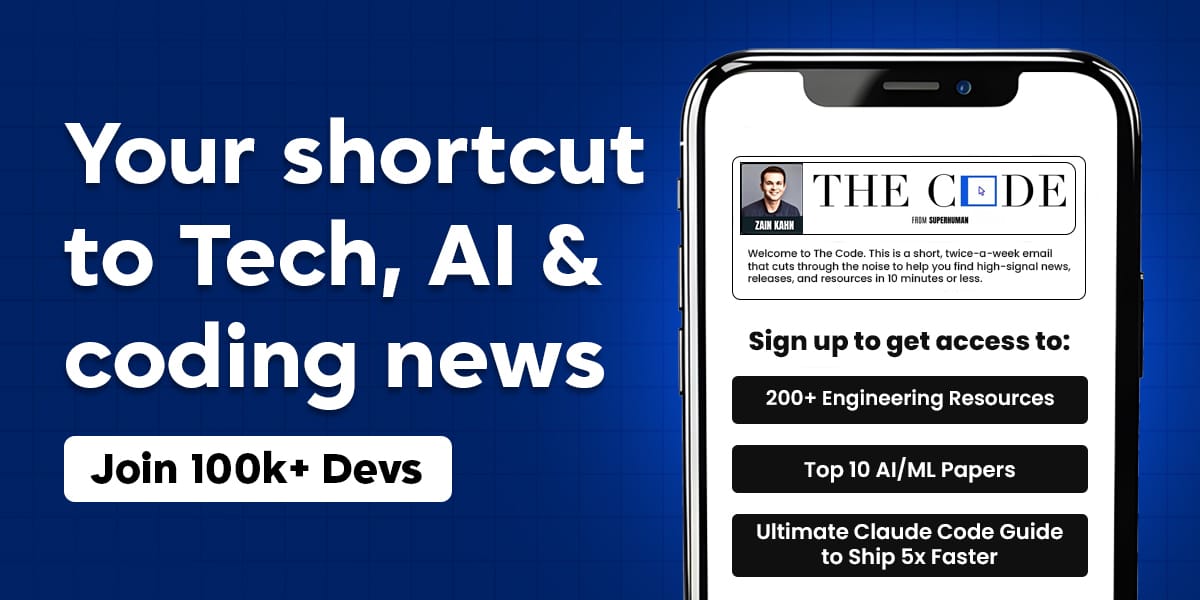
Staying behind on tech trends can be a career killer.
But let’s face it, no one has hours to spare every week trying to stay updated.
That’s why over 100,000 engineers at companies like Google, Meta, and Apple read The Code twice a week.
Here’s why it works:
No fluff, just signal – Learn the most important tech news delivered in just two short emails.
Supercharge your skills – Get access to top research papers and resources that give you an edge in the industry.
See the future first – Discover what’s next before it hits the mainstream, so you can lead, not follow.